Safety and Risk Management
Flying at Marina Beach is different than most other places we fly. We are often flying slow and low to the ground. In a mountain site that would not be very safe, but at a coastal site you have a breeze that keeps you up. It allows you to have much more control where you land. If you are returning to the setup area and see people around, you have the option to just keep flying and land in a safe clear area on the beach. Knowing the safe wind speeds and directions is important before you fly. You should never try to launch when the public is near. Even kiting your wing near the public is not acceptable. Wait for a clear path or walk down the beach to the next relaunch zone. Knowing the risks of the site and knowing how to mitigate them is how we all will keep flying Marina beach for years to come. It also very important to the success of the RRG that insures the USHPA sites we all fly.
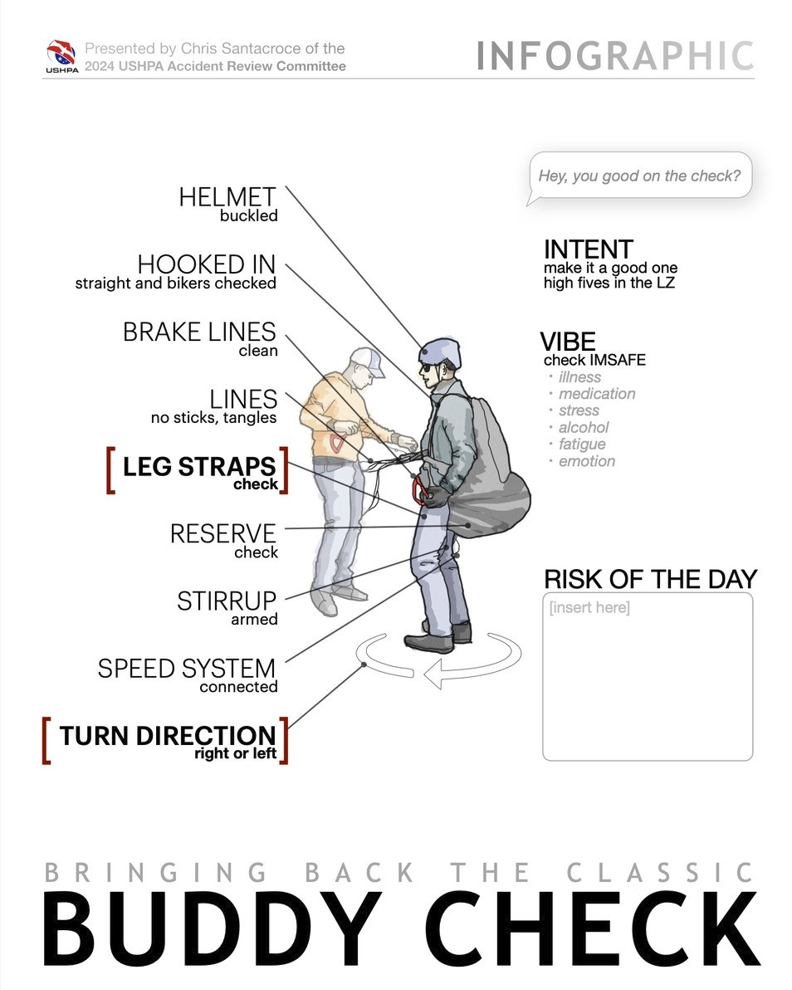
Help out a fellow pilot and buddy check them before they fly